Sneak Preview of 2025 at the Grist Mill: Celebrating 40 Years of History and Community

Hello friends,

As I look back on 2024, I can’t help but feel deeply grateful. It’s been an incredible season, full of energy, enthusiasm, and community support. From sold-out concerts and packed long-table dinners to thriving workshops and memorable community events, 2024 has shown us just how much the Grist Mill and Gardens means to so many people. With your support, we’ve been able to grow in ways we hadn’t imagined, and it’s with that momentum that we’re planning an unforgettable 2025.

Next year, we’ll be celebrating the 40th anniversary of the Grist Mill as a heritage site. We’re pulling out all the stops to make it a year of even more engaging programs, community events, and unforgettable experiences. I’d like to give you a sneak peek into some of what’s coming up as we get ready for this special year.

Building on Success: Key Events and Dates for 2025

Our 2025 season will start off strong, with a mix of familiar traditions and exciting new additions:

  • April 20th: Community Easter Egg Hunt
    We’re thrilled to kick off the season with our Easter Egg Hunt, a beloved community event that brings families together for a day of fun and discovery.
  • April 25th: Official Opening Day
    Join us for our opening day as we welcome visitors back to the Grist Mill for the season! We’re eager to showcase some of the changes we’ve made to the grounds over the winter.
  • May 11th: Mother’s Day Tea
    Our Mother’s Day Tea has become a cherished tradition, and this year, we’re planning even more treats and lovely surprises to celebrate the special women in our lives.
  • June 15th: Father’s Day Pancake Breakfast
    A hearty breakfast is the perfect way to celebrate dads! We’re cooking up something special to make this Father’s Day extra memorable.
  • June 28th, July 26th, August 23rd: Night Markets
    Our Night Markets have become a true highlight of the summer season. These evenings will feature an expanded list of vendors, more entertainment, and the same magical, twinkling lights under the night sky.
  • July 12th: Teddy Bear Picnic
    This summer favorite is back and better than ever, with activities and crafts for the little ones and their beloved teddy bears.
  • July 7th to August 15th: Kids Day Camps
    After an enthusiastic response in 2024, our kids’ day camps will return, offering little adventurers six weeks of hands-on activities, crafts, and fun outdoor learning.
  • September 27th-28th: Heritage Fall Fair
    The Fall Fair will bring a weekend of heritage displays, contests, and family fun. We’ll have some exciting surprises lined up to make this year’s fair a real showstopper.
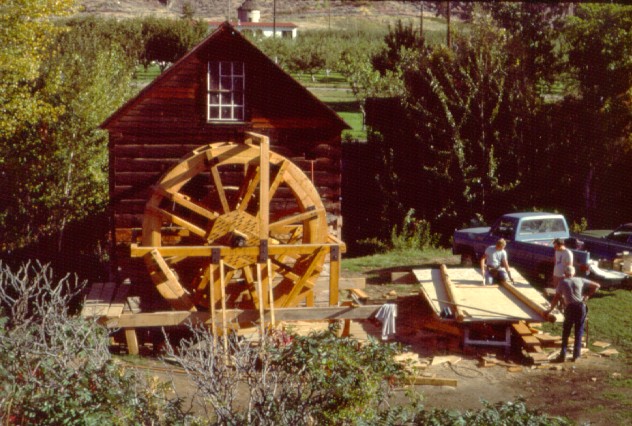
Special Anniversary Plans: Celebrating Our Heritage

To honor the Grist Mill’s 40th anniversary as a heritage site, we’re also introducing some special events and programs designed to celebrate our roots and bring our community together:

  • Our First-Ever Grist Mill Gala Event
    We’re looking forward to host our first formal gala, an evening of celebration with historical charm, a memorable meal, and live entertainment. This event will be a wonderful way to connect with friends and supporters of the mill and celebrate some of the incredible folks who’ve made this special place what it is today. More details will be available in the spring.
  • 40th Anniversary Exhibition
    We’re just starting work on a special anniversary exhibition that will feature a timeline of the Grist Mill’s evolution over 40 years, highlighting significant moments, key figures, and the impact of the community’s support.
  • Heritage Skills Festival
    Join us for a festival dedicated to traditional skills and trades. This weekend-long event will offer hands-on demonstrations in blacksmithing, weaving, and more, providing visitors a chance to learn about the crafts that were essential to daily life when the Grist Mill was first built.
  • Time Capsule Opening and Reburial
    We’re excited to open the Grist Mill time capsule, a cherished piece of our site’s history, and add new items to reflect the present day. We’ll then rebury the capsule to preserve our legacy for future generations.
  • Special Products and Souvenirs
    To commemorate our 40th anniversary, we’ll be offering limited-edition merchandise next season with a true vintage feel. These items will let you take a piece of the Grist Mill home with you!

We’re also starting work on a special project close to my heart: a book about the nearly 150-year history of Barrington Price’s grist mill. This book will capture stories of the site’s early days and its evolution, honoring the people and the community that have helped shape it.

2025: A Year to Celebrate Our Community

What truly makes the Grist Mill special is the community that surrounds it – and that means all of you. This past year, your support has allowed us to grow and evolve, and it’s what drives us forward as we look to 2025. I’m excited to see how we can continue building on this success, bringing more people together, and creating lasting memories for everyone who steps onto the Grist Mill grounds.

Thank you for making 2024 such a memorable year. We’re looking forward to welcoming you back in 2025 for our 40th anniversary celebrations – it’s going to be a year to remember!

Warmly,
Chris Mathieson
General Manager, Grist Mill and Gardens Historic Site
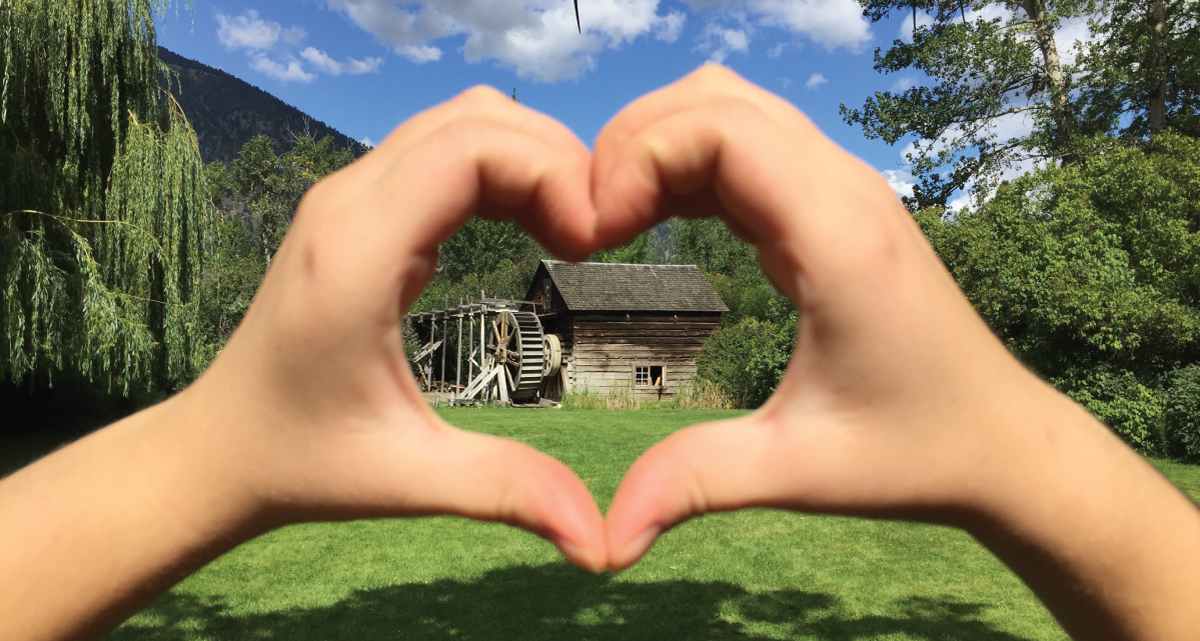
A Note from our General Manager

Hello friends!

I’m writing to you today with a specific and critical request for our friends and supporters.

For the last decade, our dedicated team has worked tirelessly to protect, preserve and share the rich history of our beloved heritage site. We’ve invested heavily in our heritage gardens, facilities and educational content of the place. We’ve curated arts, culture and community events, playing host to special family events like reunions, weddings and celebrations of life. We’ve presented artisan markets, informative lectures and school tours. Throughout this journey, we’ve strived to be good neighbors, and honour the essence and efforts of those who have contributed to this exceptional place over the years.

We’ve accomplished this in spite of a unique set of challenges associated with our unusual situation: we get no operating funding from any level of government and shoulder the responsibility of maintaining the site—we even have to pay property tax on a piece of land we don’t own. We continue to do this because we care deeply about this place and our community—in many ways, this is the best and most impactful work we’ve ever done.

We’re blessed to have the guidance and support of so many wonderful people, yourselves included. Volunteers have played a crucial role in providing engaging experiences for tourists, supporting community events, and fundraising for special projects on site. Our patrons, friends and neighbours have been generous in their words of encouragement and enthusiasm for what we do. This community’s steadfast support has empowered us to carry out so much of this meaningful work.

Recent times have presented us with a seemingly unending series of challenges, however, from forest fires and the disruptive impact of the COVID-19 pandemic to shifts in tourism and economic changes. This year, which we anticipated as an urgently-needed rebound, took an unexpected turn when another fire in August disrupted our busiest weeks, leaving our cherished site far quieter than it should have been. Our usual reserves have already been stretched thin by the last few years of difficulties, and this most recent set-back has tipped us into a tough situation.

What we need, most urgently, is immediate revenue to get us through the winter and into the start of next season. We have lots of activities and products available for you to purchase—we’re always willing to hustle for your support. Specifically, though, there a few things that would make the biggest impact on our cashflow right away and help ensure we can weather these challenges and build into an amazing 2024:

  • Pre-purchase Season Passes: By pre-purchasing a season pass for next year, you not only support us financially but also ensure your access to a year full of heritage, events, and cherished memories.
  • Book a Stay in Our Campground: Enjoy the tranquility and beauty of our campground by booking a stay. Your visit directly contributes to the maintenance and preservation of our beloved site.
  • Spread the Word: Your advocacy and word-of-mouth support are invaluable. Share your positive experiences and memories of the Grist Mill and Gardens with friends, family, and colleagues. Encourage them to explore and engage with our historical site and any of the things we do!

(If you want to make an even bigger impact, you can always make a donation to the Grist Mill Foundation, the volunteer-run charity associated with the site, or even talk to us about sponsoring one of our events or activities in 2024.)

Your contributions, whether through pre-purchasing passes, booking a stay, or spreading the word, will strengthen our efforts to overcome these current financial hurdles and continue our mission of preserving this significant heritage site.

We remain committed to providing a place where history breathes and nature thrives, but we cannot do it without your support. Let’s stand together to ensure that the legacy of the Grist Mill and Gardens perseveres for generations to come.

For those willing to offer their support or have any questions, please reach out to us at info@oldgristmill.ca.

Thank you for your unwavering support and belief in our shared heritage.

With heartfelt gratitude,

Chris Mathieson,
Operator / General Manger

Big Renovations Underway

New cabinets and concrete countertops in our kitchen.

Through the off-season, we’ve been busy with all sorts of improvement projects around the site, from kitchen renovations and washroom upgrades to plumbing and electrical improvements. We’re also significantly expanding the deck around our Visitor’s Centre, reorganizing all our gardens (and adding some new ones) and much, much more!

As difficult as COVID has been for us (since we rely on tourist visits and hosting large events), we’ve been really fortunate in finding grants and other supports that are allowing us to make some much-needed improvements on the site.

A new wrap-around deck for our Visitor’s Centre makes the perfect place to enjoy lunch in our garden

We’re now in the process of installing new site furniture (benches, garbage barrels) as well as updated informational signage. In fact, the Grist Mill Foundation volunteer group will soon be offering up dedication plaques on our new benches as a special fundraiser for their work. Make sure you subscribe to our newsletter to be among the first to hear about this unique opportunity to commemorate a loved one or special event on our spectacular grounds.

New slab benches provide the perfect places to stop and contemplate the beauty around you.

We’re particularly excited about the upgrades behind the scenes, like all the improvements to our kitchen including new cabinets, concrete countertops, electrical upgrades as well as a new commercial range and oven that will give us even more capacity for our Pantry Share program, for catering special events here and elsewhere and for our popular lunch service.

Serious upgrades to our kitchen equipment!

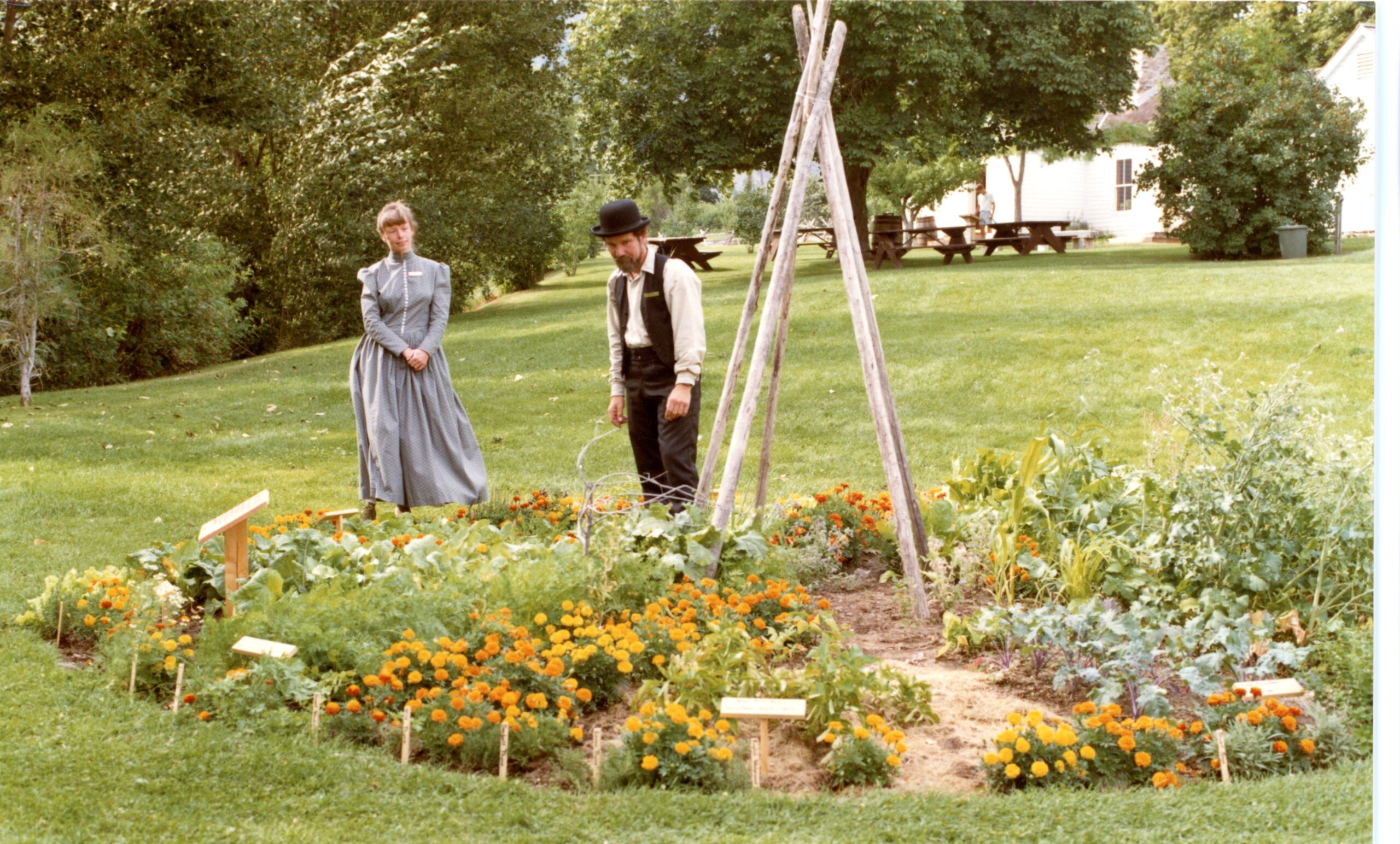
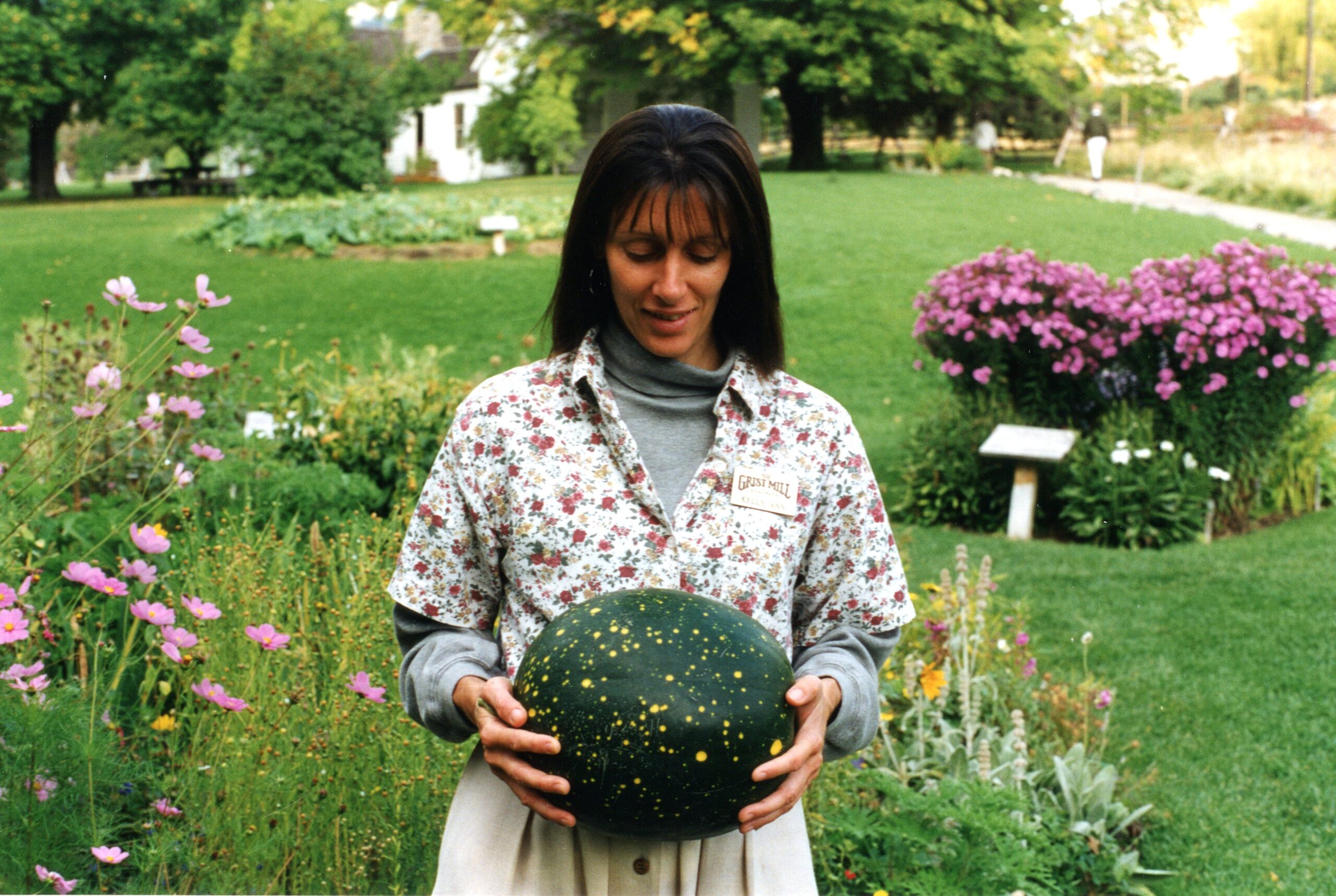
We’re also excited about our ongoing garden upgrades, which are intended to bring back some of the incredible heritage seed research and preservation done by the amazing Sharon Rempel back in the late 1980’s and early 1990’s. It’s truly amazing how many rare heritage varieties of food and ornamental plants she was able to collect, display and share. Although bringing back her work is a long-term project, this is the season that visitors will see the largest changes to our gardens as we massively reconfigure them in exciting ways!

With all this big work happening on site right now, we hope you can make plans to come visit us this summer, we’ve got some really big things to show you!

Project: The Birdbox

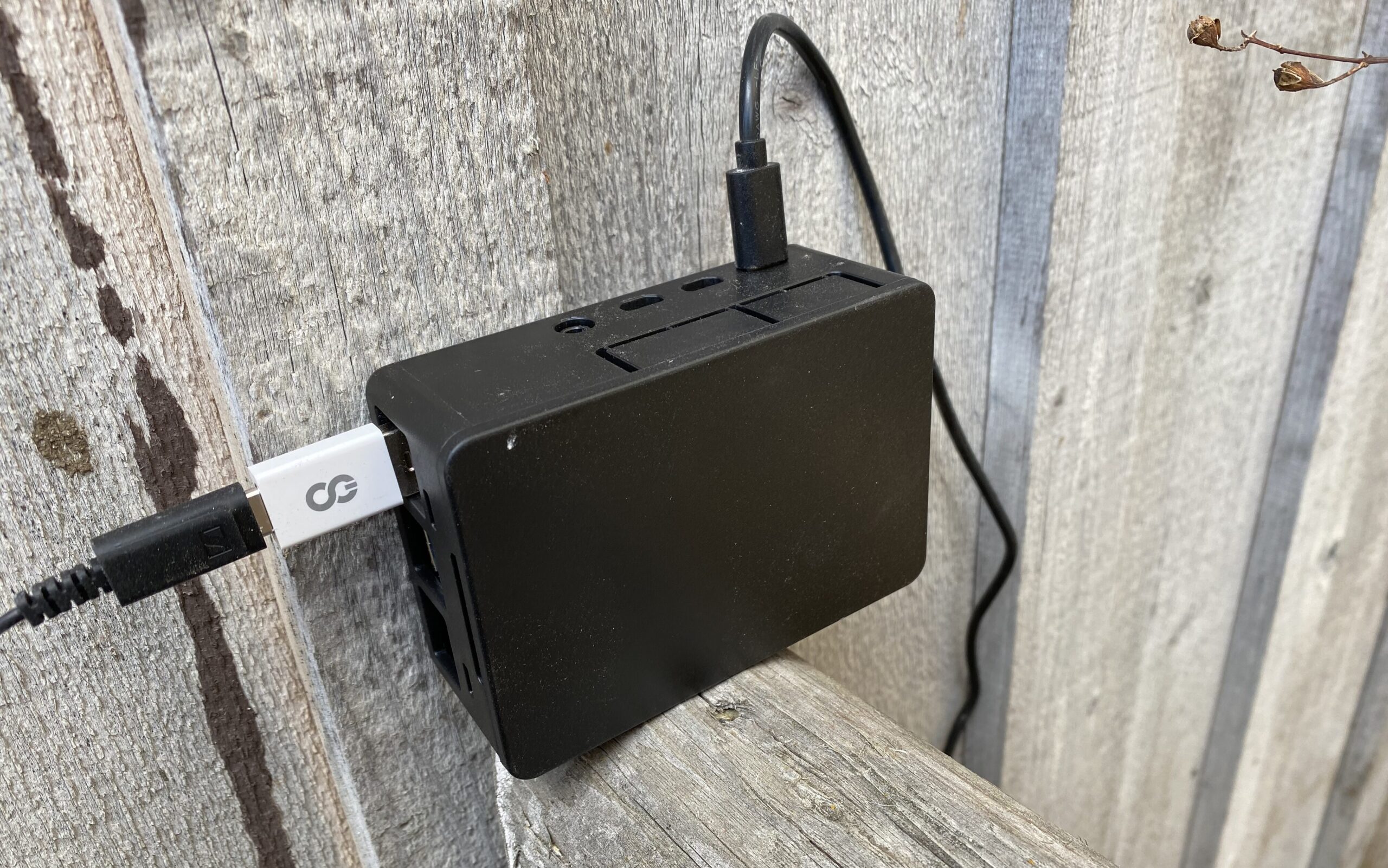
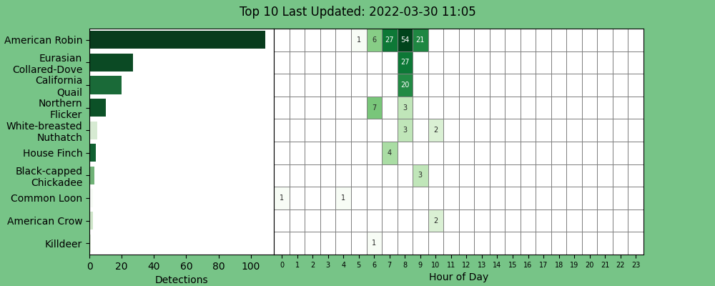
It may not look like much, but that little black box is running a fully-powered computer dedicated to listening to and analyzing birdsong on our site. Using microphones, data on the six thousand most common bird species around the world, and some amazing software, it can listen and analyze what it hears in real time.

This project started a little over a year ago when we first discovered an amazing iPhone app called BirdNET, a project out of the Cornell University Lab of Ornithology and the Chemnitz Institute of Technology. Using your phone’s microphone, you can record and submit bird calls to their system for near-instant analysis. On a walk or in your backyard, often you hear birds before you can see them and we loved being able to pull out our phones and record anytime we heard an interesting bird song.

Hour-by-hour breakdown of the species the box has identified this morning.

We couldn’t help but wonder how we could offer that feature as a service to those visiting our beautiful heritage site; because of our unique combination of tended gardens and old creekside cottonwoods, plus being on a major migratory pathway, we get an awful lot of interesting bird visitors. After a little research, we discovered that there were several efforts underway to take the key features of BirdNET and have them run on a kind of small hobby computer called a Raspberry Pi. This special software has been written by a small group of enthusiastic volunteers and is still in active development, constantly adding new features and improving reliability.

The process of setting up our bird box was a little technical, but we’re excited that we’ve now been collecting data for a week and hope to soon upgrade the microphone as well as put the whole thing in a solar-powered, weatherproof case. Eventually, we hope to give our visitors access to the recordings and statistics through our website as well as have some sort of automatically-updating signage so that site visitors know which bird species to watch out for as they tour the site.

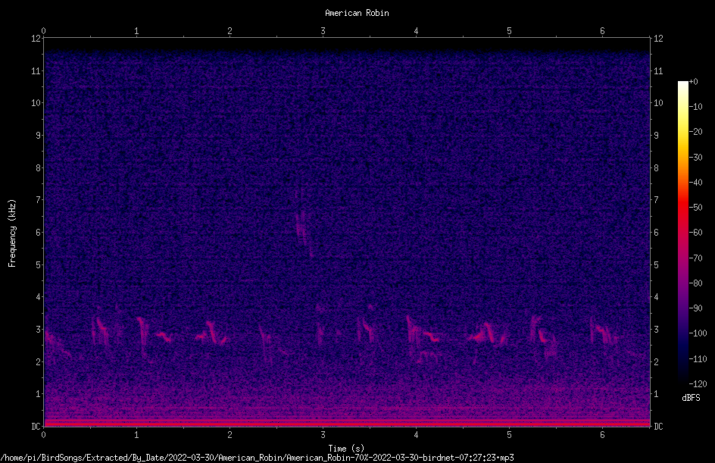
A spectogram showing the sort of data the box uses to identify birds by their sounds. This image features a particularly chatty robin.

This is the second of a series of citizen-science projects we’re undertaking on site (the first was installing our own weather monitoring) and we hope to add more as we’re able–we’d love to be able to monitor the conditions of the creek running through the site (oxygen levels, water level, temperature, cloudiness, etc) for example. There is also people working on developing systems that can do the same real-time identification as our bird box, but for ultrasonic bat calls and insect buzzing. If you have ideas on other project that might suit our unique space, please don’t hesitate to get in touch.

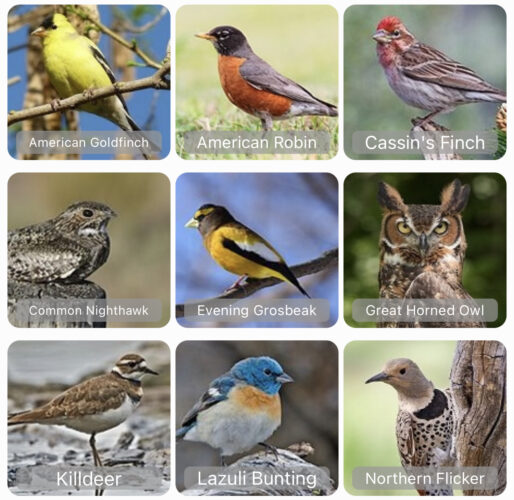
Some of the many birds we’ve seen on-site in the past. We wonder what else we might hear…

What’s Your 2020-2.0 Vision?

Coordinate a Retreat, Schedule a Meeting, Create a Product, Start a Business, Record a Podcast, Organize a Dinner, Plan a Party, Arrange a Farmer’s Market, Harvest a Crop, Build a Community Resource, Establish an Institute, Run a Workshop, Develop a Prototype, Film a Vlog, and so much more…

Two years ago, we thought we were so smart… we’d just come up with a lovely pun to launch a campaign to encourage others to do all sorts of wonderful things here. We’d never had as many great ideas, or planned such an amazing schedule as we had planned for summer 2020, but then COVID happened–putting a stop to everything.

We’re optimistic about 2022, though, and so we’d like to try again… the “2020 Vision” pun doesn’t really work anymore, but maybe we can pretend this is 2020 version 2.0?

The Grist Mill and Gardens is more than just a lovely heritage site; it’s the perfect platform to build your own entrepreneurial opportunity. We’re now accepting pitches from the community for ways you would like to use this site in 2022. Maybe you want to host a retreat or special event, maybe this is the perfect place to grow or add value to a product you’ve always wanted to create, or maybe you have a whole new business you’d like to develop.

Among our many assets are the 12 acre site itself and its heritage buildings, lovely gardens, wide-open spaces, 5 acres of uncultivated farmland and creekside campground. We have A/V equipment suitable for presentations, concerts and more. Our (newly renovated!) inspected commercial kitchen is available after-hours and off-season with a variety of gear you might need. We also have online infrastructure like an ecommerce store and ticketing system as well as thousands of fans on Facebook, Instagram, YouTube, Twitter, email and more. We even have tables, chairs, string lights, chalkboards and all the bits and pieces that help make events here a success.

We definitely have our own plans for 2022 as we we hope to return to our usual series of community and private events, give tours and offer a range of workshops, presentations and concerts but we recognize that there’s room for so much more. Maybe you’ve got the perfect idea and the drive to make it happen…

Although we’re always willing to entertain good ideas, we’re in the middle of planning for the coming year and will be considering pitches submitted before March 15th, 2022 . We will keep whatever you submit confidential and you own your own ideas–if we can’t support your idea, you’re certainly welcome to take it elsewhere. (Please don’t hesitate to get in touch if you have any questions along the way; email us at info@oldgristmill.ca.)

So, what’s your 2020-Two vision, and how can we help make it happen?


Submissions will be reviewed in the order received; we’ll be in touch within two weeks to schedule a meeting, either in person or by phone.

Call for Presenters – 2025 Speaker and Workshop Series

The Grist Mill and Gardens has now started planning our 2025 lecture and workshop series and we’re looking for speakers and hands-on presenters for a wide variety of topics.

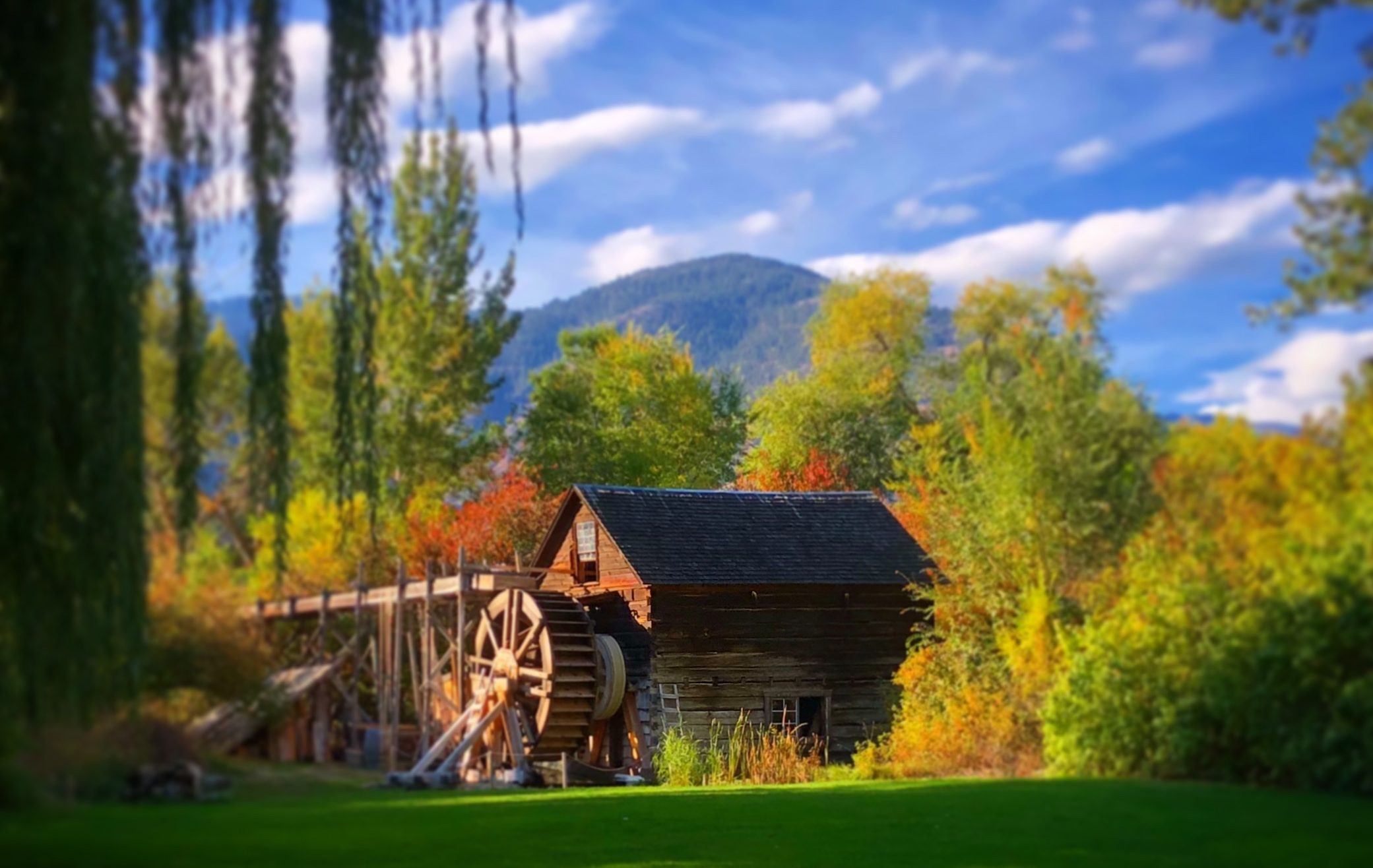
We are a 12 acre BC heritage site in the heart of the Similkameen Valley featuring western Canada’s only working waterwheel-powered flour mill (built in 1877) and stunning ornamental, herb and vegetable gardens. History, agriculture and art combine in fascinating ways on our site and here are just some of the sorts of topics we’d love to see:

  • Food Preservation (canning, smoking, curing, drying)
  • Food Production (bread baking, cheesemaking, sprouting grains, microgreens)
  • Food Issues (food security, climate change, GMOs)
  • Local History (geneology, local characters, archeology, First Nations history)
  • Gardening (planning a garden, xeriscaping, composting, seed saving, companion planting, pruning, pest control)
  • Plant Identification and Uses (healing herbs, foraging, invasive species, natural dying with plants)
  • Wildlife (birds, bats, pollinators)
  • Visual Arts (painting, sketching, photography)
  • Fibre Arts (spinning, weaving, knitting, crochet, sewing, quilting, lace-making)
  • Rural Living Skills (wood stove cooking, raising chickens and other livestock, candle making, soap making)
  • Traditional Crafts (making paper, pressed flowers, wreath making, flower arrangement, quilling)

We generally offer two styles of presentation:

  1. Lectures – These are offered on weekend afternoons or weekday evenings and are usually no more than an hour long. Weekend lectures are offered at no additional cost to visitors and seasons pass holders. We generally offer an honourarium for these presentations.
  2. Hands-on Workshops – These are generally two or more hours long and run on weekday evenings or during half or full days on the weekend. They often have registration fees associated which are split with the presenter.

If you’re interested in presenting here in 2025 on these (or any other topic that seems relevant), please use the form below to tell us more about what you’d like to propose.

Please direct all questions to Chris Mathieson, Site Operator / General Manager at info@oldgristmill.ca and please share this with anyone else you think might be interested. Deadline to submit a proposal is March 15, 2025 and submissions will be considered in the order received.


Name
This presentation would fit best under which category
Multiple selections allowed
How much time would you need
Preferred Audiences
Multiple selections allowed
Tell us a little about who you are and your interest and proficiency in this topic

Save

Save

Save

The Victorian Language of Flowers

As a heritage site with several acres of gardens, we’re always looking for new ways to use our gorgeous plants to tell stories;  not only the stories of the plants themselves–where did they originate? how did they get here? what makes them important historically?–but also their broader uses and meanings. Many of our plants are edible, for example, or have special medicinal or artistic uses, or are otherwise just exceptionally cool.

Another way to look at plants, though, is through their symbolism. In the Victorian era, it was in vogue to use special meanings attached to different flowers to create bouquets that communicated a wide variety of sentiments that might be awkward or otherwise couldn’t be spoken aloud in prim-and-proper Victorian society.  With the help of any one of many popular flower “dictionaries” available at the time, one could communicate blinding love, deep longing or crushing regret with a handful of carefully selected blooms. Even today, we still associate red roses with love.
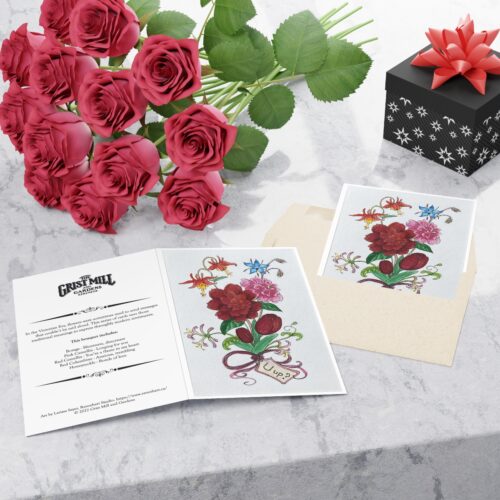
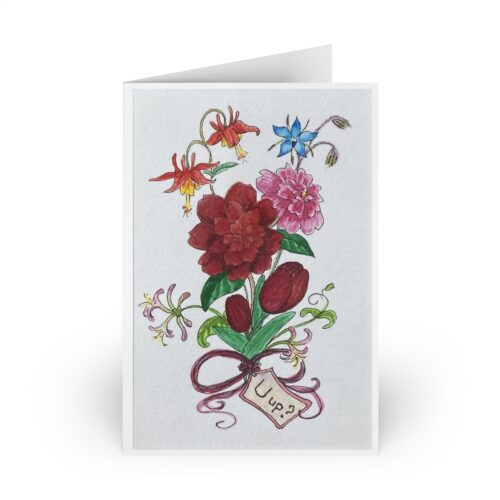
This coming summer (2022), as part of the significant improvements we’re making to our gardens, we’ll also be making available pamphlets that will help you learn about the meaning of some of the key flowers we’ve planted on site and add an extra layer of meaning to your visit, if you’re interested.

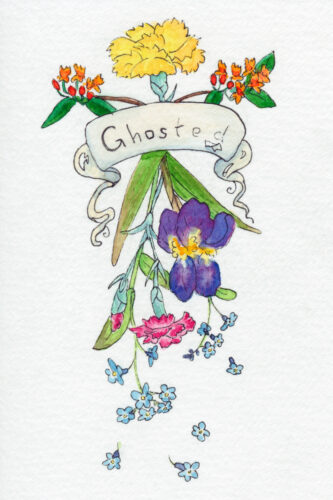
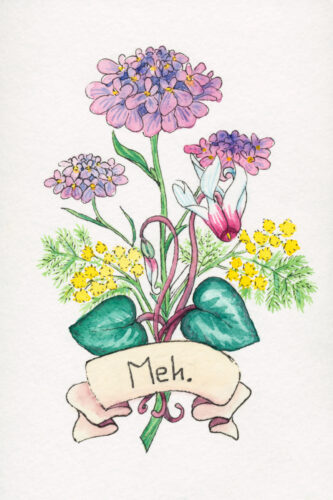
We’re also excited to be selling some cards featuring lovely botanical illustrations that share some thoroughly modern sentiments. You can find those in our online store.

Caring for your Sourdough (Part Two)

Okay, fine… you’ve got this new sourdough culture that you feel responsible for, and want us to be more specific in how to tend for it on a regular basis. If you haven’t already, make sure you read Part One first–it’ll make everything make more sense.

How to care for your Culture

Assuming you got your culture from us, it should be teeming with life. You’ll need to find it a bigger home (a 1L–or larger–canning jar or some other clean, non-porous container). Scoop or pour it from the jar we gave you into its new home.

It’ll be ready for a meal, so give it 1 cup of flour and 1/2 cup of water and stir to combine. Ideally, the water should be room temperature bottled water or tap water that’s been let to sit in the air for an hour or two, to evaporate the chlorine before you add it (if you live in a place with chlorinated water). 24 hours later, pour out everything but about 1/2 cup of culture and add 1 cup of flour and 1/2 cup of water

Repeat this daily for the next couple of days and before long you’ll notice that a few hours after you add the flour and water, the culture will bubble and rise up in the container. Once you see that happen, you can start to use the culture (or more accurately, the discarded part) in your baking. The way to know for sure is to do the “float test”. To test the culture, place a teaspoon of it (just from the top, don’t stir it down) in a glass full of water, it should hopefully float. If it does, you can make bread. Right away!

It doesn’t need to be actively frothy to be useful, but you know it’s at the peak of its activity when it passes the float test.

If you get tired of trying to keep up with your culture, you can always slow it down by putting it in the fridge–once it’s cold, it only needs to be fed once a week, not once a day (or more).

Next, in Part Three of this sourdough primer, we’ll give you a recipe or two to start with.

Caring for your Sourdough (Part One)

Congratulations, you’re now the proud owner of a living sourdough culture. The truth is, taking care of it is more art than science, so we’re going to give you a lesson, not just a set of instructions…

Some Useful Background

A sourdough culture is made up of four things: flour, water, yeast and bacteria. 

The basic idea is that you have this jar of flour and water in which both yeast and a particular set of beneficial bacteria happily live in. Those guests gradually eat the flour and turn it into carbon dioxide, alcohol (often called “hooch”), a tangy acid (hence the name “sourdough”) and a bunch of other complex things. In other words, you’ve got an advanced microbiology experiment, right on your kitchen counter.

Left alone, your living culture will produce so much acid, alcohol and carbon dioxide that the whole process will grind to a halt and the culture will die. As the proud owner of a sourdough culture, your goal is to keep the thing alive and adequately happy until you’re ready to take advantage of it’s incredible transformative powers. By feeding your culture regularly and taking away some of it for baking, you can easily control the accumulation of these by-products.

There are also a few other variables you have in your control, for example, temperature. Your culture is most active at a temperature just above room temperature; as such, the warmer the room, the more often you’ll need to feed it. Putting your culture into the fridge is an effective way to slow it down, if you know you can’t tend it consistently, but don’t store your culture in an air-tight container for too long; it can suffocate on the carbon dioxide it’s creating.

How often and how much you feed your starter culture is a matter of personal preference, but be mindful that if you feed it big meals of flour and water regularly, you’re going to have a lot of very happy starter. The less often you feed it, the more time there is for acids and alcohols to build up, which add flavour but reduce the activity. In terms of overall amounts, we feed ours equal volumes of water and flour once a day–usually about a quarter cup of each, but go higher if we know we’re giving some to others, or we’re going to bake a bunch of bread.

Because different flours can weigh different amounts of the same volume, your culture may be more or less runny than ours. If you see a recipe that mentions “baker’s percentages” or “percent hydration”, the numbers are based off the weight of flour; a starter with 100% hydration has equal weights (not equal volumes) of water and flour. The starter culture we gave you sits at about 140% hydration, but with that much water the culture eats through its food pretty quickly… if you’re not planning on baking every second or third day like we do, we’d suggest reducing the amount of water you put in and go for a less wet culture.

How will you know if something’s not right with your culture? If your culture smells yeasty and a little like sourdough, and seems frothy and like it’s grown a little a few hours after feeding it, you’ve got a healthy culture. If it smells really sour, or like it’s just been on a Just-Hit-Legal-Drinking-Age-style bender, it likely needs to be fed; you need to use and/or dilute it with fresh flour and water right away. If you see mold on your starter, you can safely assume your culture is dead. Way to go, murderer! (The particular yeast and bacteria that co-exist in your healthy culture are remarkably good at keeping bad bacteria and molds from growing, so any sign of them means it’s time to dispose of your culture.)

If you leave your culture untended for a few days, a greyish liquid might form at the top of your culture. That’s just hooch (alcohol) and you can either pour it out or mix it in; the alcohol will cook out when you’re baking and help give your bread a more interesting flavour, but too much of it can kill your culture.

If you know that you won’t be able to give your culture any attention for awhile, you might want to consider long-term storage. One of the best ways to do this is to freeze it. First, take some of your culture and smear it on a piece of wax paper. Once it’s completely dry, crumble the culture into powder and put it into a freezer bag, remove the air and put it into the freezer. The yeast goes dormant when it’s dry; when you’re ready to starting playing again, add the powder to a mixture of flour and water and start feeding it regularly again. It might take a week or two for the culture to fully come back to life, but when it smells and acts right, you know it’s ready for use.

When you use it for your first loaf of bread, you’re only going to use a portion of your starter–the rest will stay behind and continue to grow, which is why a sourdough starter culture is sometimes called a “mother culture”.

Of course, no matter how carefully you try to limit the amount of flour/water you’re adding, it doesn’t take long for you to end up with more starter than you can handle. Some of it might have to go down the drain, but sourdough starter can be used in a wide variety of recipes besides bread. For example, we make a quick pizza dough with it all the time. You can also use it for pancakes, waffles, crackers, flatbreads and more. And, of course, you can always share it with friends.

In Part Two of this guide, we’ll give you some more specific instructions and in Part Three, we’ll give you a recipe or two to start with.

COVID-19 Update – May 12, 2020

(There’s useful information in our first update from April. Check it out, too.)

Before any of this started, we’d planned to open on May 9th for the season–not only did that not happen, but we’re still not sure when we might be opening this year; there’s still too much unknown about the sorts of restrictions and adaptations that will be required by our Provincial Health Officer and WorkSafeBC. Fortunately, after 143 years, we know the spectacular heritage of this place isn’t going anywhere and we are finding ways to manage through this challenging time.

We’ve now cancelled all concerts, weddings, in-person workshops, dinners and more that we had planned for this summer. If you’ve already made a paid reservation or paid an event deposit, please get in touch so that we can sort out reimbursement.

These unique challenges have required us to be creative and so we’ve launched a new-and-improved Pantry Share program (with delivery to your door!), we’re offering daily “Virtual Field Trips” on Facebook Live and YouTube. Our Online Store is filled with all sorts of new products as well, and if you live in the Okanagan, Similkameen or Lower Mainland we can deliver them to your door!

One of the most straightforward ways you can help support us through these challenging times is to buy a Season Pass to the site right away. (And one for your friends, of course.) If we’re open for less than 75 days this year, your Season Pass will automatically be extended to the 2021 season. But in the meantime, that money will make a real difference for us.

As things change, we’ll be sharing more information regarding our plan for the season and how we hope to take care of ourselves, our site, our employees, our vendors and our community. You can always follow us on Facebook or subscribe to our newsletter to get the latest updates.

Ultimately, we’re all in this together, even if we’re apart.

We ❤️ you. (Go wash your hands.)